

Can the difference between a diamond in the rough and a gem mint specimen really come down to a few millimeters? For avid collectors and investors in baseball cards, the answer is a resounding yes. Understanding how to score a baseball card is not just a skill; it's an art form that dictates the market value of these treasured assets. This article offers expert insights into the intricate scoring criteria, from centering to edge inspections, unraveling the secrets that can elevate a collection's worth significantly. Dive in to master the nuances of card condition assessment and enhance your expertise.
Understanding Baseball Card Scoring Criteria
Understanding how to score a baseball card is vital for collectors aiming to maintain or enhance the value of their collections. Grading criteria form the backbone of card condition assessment, which directly influences market value. Each card's condition is appraised based on centering, corners, surface, and edges. These factors determine the card's overall grade, serving as a benchmark for collectors and investors alike.
Centering is the foremost criterion in baseball card scoring. To evaluate centering, one measures the borders of the card, ensuring they are even. Perfect centering is exemplified by equal measurements on both sides, such as a 4 cm left and right border. A well-centered card not only enhances visual appeal but also meets a standard necessary for higher grading categories.
Corners are the second critical aspect of card condition assessment. A card with sharp corners and no whitening is indicative of mint condition. Using a magnifying tool to examine for any whitening or dullness is essential. Sharp corners without imperfections denote that the card has been well-preserved, thereby increasing its desirability and potential market value.
The surface of a baseball card must be scrutinized under different lighting conditions to detect scratches, dents, or any imperfections. Surface quality impacts the card's grade significantly, as visible defects can detract from its aesthetic and financial value. Matte-finished cards may require closer inspection, as their finish can obscure subtle flaws.
Edges, the final criterion, must be inspected for signs of fraying, splitting, or whitening. Cards with pristine edges are more likely to achieve high grades, thus fetching higher prices. Any ink disruption or visible edge damage reduces the card's appeal to collectors.
- Centering: Ensure even borders
- Corners: Sharp and free of whitening
- Surface: No scratches or dents
- Edges: No fraying or whitening
Step-by-Step Guide to Scoring a Baseball Card

A methodical approach to scoring a baseball card is indispensable for collectors aiming to ascertain the true condition and potential market value of their cards. By following a structured inspection process, collectors can systematically evaluate each aspect of the card's condition, ensuring no detail is overlooked. This comprehensive approach not only aids in achieving an accurate grade but also informs the decision-making process regarding the card's potential resale value or submission for professional grading. Adhering to a step-by-step method allows collectors to consistently apply grading criteria, reducing subjective bias and enhancing the card's investment potential.
- Check Centering: Begin by measuring the card's borders to ensure even spacing. Perfect centering is characterized by equal measurements on all sides, enhancing the card's aesthetic and grading prospects.
- Inspect Corners: Use a magnifying tool to examine the corners for sharpness and any signs of whitening. Sharp and pristine corners are indicative of a well-preserved card, crucial for achieving a high grade.
- Evaluate Surface: Under various lighting conditions, inspect the card's surface for scratches, dents, or imperfections. A flawless surface is vital for maintaining both the card's visual appeal and its monetary value.
- Examine Edges: Check the edges for fraying, splitting, or any whitening. Unblemished edges are essential for a higher grade, as they reflect careful handling and preservation.
- Make a Final Assessment: After inspecting each criterion, compile your observations to make a final assessment of the card's condition. Consider if the card meets the standards for a gem mint grade, which substantially enhances its market value.
By meticulously following these steps, collectors can significantly influence the card's marketability and valuation. Cards meeting the gem mint criteria, without visible defects such as wrinkles or bent corners, are more likely to command premium prices in the market. Proper grading not only elevates the card’s financial worth but also assures potential buyers of its authenticity and condition, thereby enhancing its desirability.
Examples of Graded Cards and Professional Grading Scales
Professional grading systems are pivotal in standardizing baseball card evaluations, providing collectors and investors with a reliable metric for card condition and market value. Grading services like PSA (Professional Sports Authenticator) and Beckett offer a structured approach to assessing card quality, thus enhancing transparency and trust in transactions. These services employ detailed grading scales that assess key attributes such as centering, corners, surface, and edges. By offering a standardized evaluation, professional grading helps stabilize the market, as collectors can confidently appraise and trade cards based on their certified grades.
An illustrative example of a professionally graded card is the 1987 Topps Tiffany, noted for its exceptional centering, with both front and back demonstrating equal spacing. Such cards often achieve higher grades due to their visual symmetry and pristine condition. For vintage cards, such as those pre-dating the 1960s, grading expectations differ, allowing for minor wear and tear due to age. These cards are graded on a curve, considering historical context and typical preservation challenges. Conversely, modern cards are held to stricter standards, demanding near-perfect condition to achieve top grades.
| Grading Service | Scale Description | Examples of Graded Cards |
|—————–|——————-|————————–|
| PSA | Grades on a scale from 1 to 10, with 10 being gem mint condition. | 1987 Topps Tiffany with even centering. |
| Beckett | Utilizes a 1 to 10 scale, factoring subgrades for centering, corners, edges, and surface. | Modern cards requiring pristine condition. |
Professional grading scales afford consistency in valuation, crucial for both novice and seasoned collectors navigating the market. These scales mitigate subjectivity, offering a universal standard that reflects a card's condition accurately. Whether trading or investing, collectors rely on the credibility of PSA and Beckett certifications to ensure fair market transactions. Such standardization underscores the importance of professional grading in maintaining the integrity and value of the baseball card market.
Tips for Preserving and Enhancing Baseball Card Value
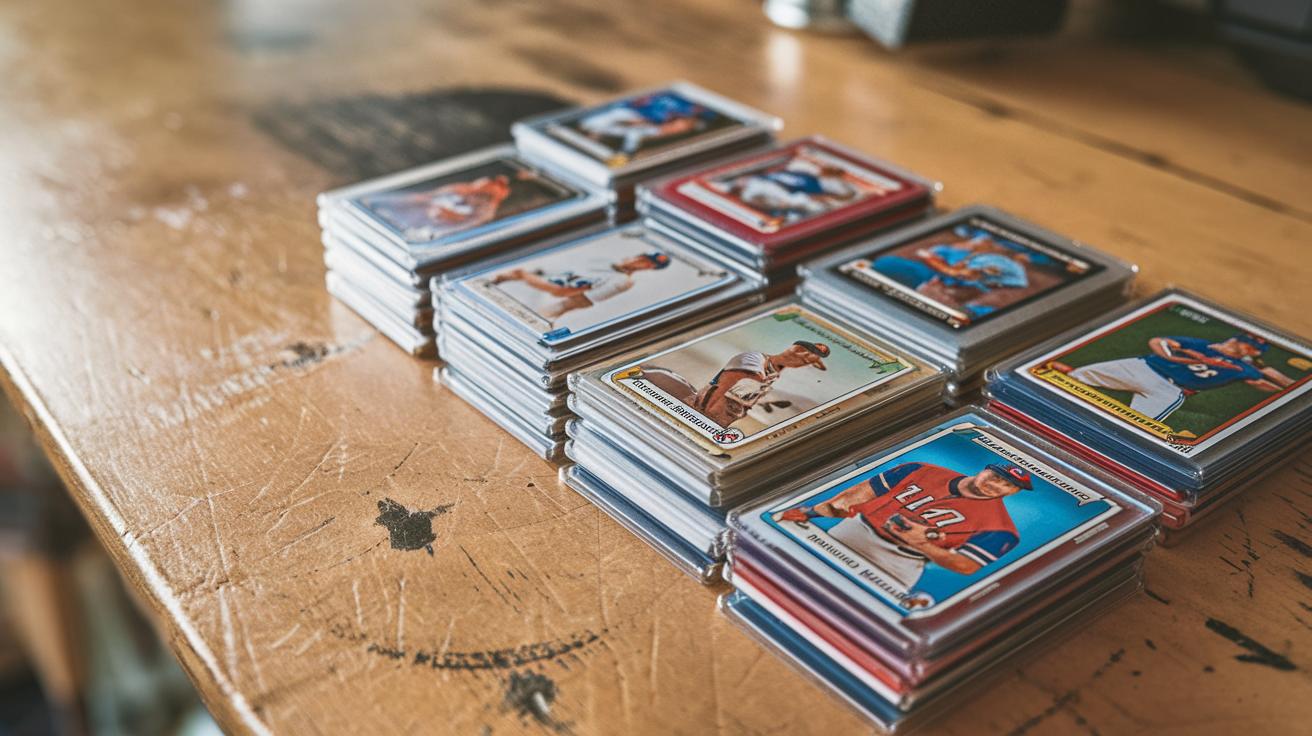
Preserving the condition of baseball cards is paramount for maintaining and potentially enhancing their market value. Proper grading is crucial, as it significantly impacts resale prices and desirability among collectors. Cards with defects, such as bent corners or surface scratches, are less likely to receive high grades, which diminishes their investment potential. Ensuring cards remain in pristine condition involves strategic measures to protect them from environmental and handling damage. By prioritizing preservation, collectors safeguard their investments and ensure that their cards retain or increase in value over time.
- Use Protective Sleeves: Store cards in high-quality, acid-free sleeves to prevent physical damage and exposure to contaminants.
- Avoid Direct Sunlight: Keep cards out of direct sunlight, which can cause colors to fade and degrade the card's material.
- Handle with Care: Always handle cards with clean hands or use gloves to prevent oils and dirt from transferring onto the card.
- Store in a Stable Environment: Maintain a consistent temperature and humidity level to prevent warping or deterioration.
- Regularly Inspect for Damage: Periodically check cards for potential damage or deterioration to address issues promptly.
Implementing these practices plays a significant role in preserving the long-term investment value of baseball cards. By using protective sleeves and maintaining environmental stability, collectors effectively prevent common forms of damage. Regular inspections and careful handling further ensure that cards remain in optimal condition, making them more attractive to potential buyers. These proactive measures contribute to preserving the historical and financial significance of each card, ultimately enhancing its market appeal and value.
Exploring the Market for Graded Baseball Cards
Grading plays a pivotal role in determining the resale value of baseball cards. A card's grade, often assessed by services like PSA or Beckett, reflects its condition based on criteria such as centering, corners, surface, and edges. Cards graded as "gem mint" consistently fetch higher prices due to their pristine condition. The grading process provides a standardized measure of quality, thereby instilling confidence in buyers and sellers regarding the card's authenticity and worth. Consequently, well-graded cards are more likely to attract serious collectors and fetch premium prices in the market.
The graded card registry is an essential platform for the trading and reselling of authenticated baseball cards. These registries serve as a centralized marketplace where collectors can list and purchase cards with verified grades. By providing a detailed record of each card’s grading history, the registry ensures transparency and traceability, which are critical for maintaining market integrity. This setup not only facilitates transactions but also enhances the card's credibility, making it a valuable asset for investors and collectors alike.
- Increased Market Value: Graded cards tend to command higher prices due to verified condition and authenticity.
- Enhanced Buyer Confidence: Professional grading provides assurance of a card's quality, reducing buyer uncertainty.
- Market Stability: Standardized grading reduces market volatility by offering consistent quality benchmarks.
- Investment Potential: Graded cards often appreciate in value, making them appealing for long-term investment.
Trends in the graded card market reveal a growing demand for vintage cards, driven by their historical significance and rarity. Collectors often seek these older cards, leading to increased competition and fluctuating prices. Simultaneously, the market for modern cards remains robust, particularly for those featuring emerging players or limited editions. These dynamics illustrate the graded card market's complexity, where shifts in collector interest and economic factors can influence pricing and demand. Understanding these trends is crucial for anyone looking to invest in or resell graded baseball cards.
Final Words
Grasping the criteria for baseball card scoring is crucial for collectors and investors aiming to enhance their assets' value. By thoroughly inspecting centering, corners, surface, and edges, enthusiasts ensure their cards meet gem mint standards, radically affecting market worth. Not only does understanding how to score a baseball card provide insights into achieving higher value, it also supports making informed decisions in maintaining card quality over time. Engaging in professional grading scales and preserving practices fosters a rewarding experience, securing long-term potential in the baseball card market.
FAQ
How to score a baseball card for beginners?
Scoring a baseball card for beginners involves assessing four main criteria: centering, corners, surface, and edges. Beginners should measure borders for even centering, ensure sharp corners, inspect surface for scratches, and check edges for fraying.
How to score a steal in baseball?
Scoring a steal in baseball requires noting when a runner advances to the next base without a hit during a pitch. The statistician records the base stolen and assigns credit to the runner.
How do you grade a baseball card?
Grading a baseball card involves evaluating centering, corners, surface, and edges. Professional grading services like PSA and Beckett provide standardized scales to ensure consistent assessment and enhance market value.
How to read baseball scoreboard on TV?
Reading a baseball scoreboard on TV involves understanding each section: innings, runs, hits, and errors. The team names are displayed, followed by columns indicating their performance in each inning and final totals.
How do you read a baseball card?
Reading a baseball card requires identifying the player's name, team, position, and statistics. The card typically features recent performance data, biographical information, and any notable achievements.