

Could a small piece of cardboard truly be worth millions of dollars? The world of baseball card collecting defies conventional logic, where nostalgia meets high-stakes investment. With record-breaking sales like the 1952 Topps Mickey Mantle selling for $12.6 million, collectors and enthusiasts often wonder what propels these cards into such astronomical price ranges. This article ranks the top 10 baseball cards ever sold, delving into the elusive blend of rarity, player legacy, and sheer collector frenzy that drives these prices sky-high. Discover what makes these tiny relics the crown jewels of collection lore.
Top 10 Baseball Cards Ever Sold for Millions
-
1952 Topps Mickey Mantle
- Sale Price: $12.6 million
- Year Sold: 2022
- The most expensive baseball card ever sold, revered for its iconic image and rarity within the hobby.
-
T206 Honus Wagner
- Sale Price: $6.6 million
- Year Sold: 2021
- Known for its extreme rarity, with only about 50 known to exist, making it a holy grail for collectors.
-
1914 Baltimore News Babe Ruth
- Sale Price: Over $6 million
- Year Sold: Estimated
- Valued for its historical significance as Babe Ruth’s rookie card, a cornerstone of any vintage collection.
-
1933 Goudey Babe Ruth
- Sale Price: $4.6 million
- Year Sold: 2021
- Celebrated for its vibrant design and Ruth's legendary status, making it a staple in high-end collections.
-
1951 Bowman Mickey Mantle
- Sale Price: Part of top sales
- Year Sold: Estimated
- A rookie card that marks the beginning of Mantle's illustrious career, highly sought after by enthusiasts.
-
1916 M101-4 Sporting News Babe Ruth
- Sale Price: Notable high sales
- Year Sold: Estimated
- Another significant Ruth card, capturing his early career, deeply valued for its historical context.
-
1955 Topps Roberto Clemente
- Sale Price: Part of top sales
- Year Sold: Estimated
- Celebrated for its depiction of Clemente's rookie season, prized for both its rarity and the player's legacy.
-
1969 Topps Reggie Jackson
- Sale Price: Part of top sales
- Year Sold: Estimated
- A rookie card that captures the charisma of "Mr. October," treasured by collectors for its iconic status.
-
1954 Topps Hank Aaron
- Sale Price: Part of top sales
- Year Sold: Estimated
- Recognized for marking the debut of Aaron’s legendary career, a must-have for vintage card aficionados.
- 2009 Bowman Chrome Mike Trout
- Sale Price: $3.9 million
- Year Sold: 2020
- A modern classic, this one-of-a-kind Superfractor card represents Trout's meteoric rise in MLB and is a testament to the enduring allure of baseball card collecting.
These cards achieve remarkable prices due to their scarcity, the legendary status of the players depicted, and the enduring appeal of baseball history.
Understanding the Value of Iconic Baseball Cards

What factors contribute to the high value of iconic baseball cards? The value of these cards is primarily influenced by player fame, card rarity, condition, and historical context.
Player fame is a significant driver of baseball card values. Cards featuring legendary players such as Babe Ruth, Honus Wagner, and Mickey Mantle often command premium prices due to the players' lasting legacies and widespread recognition.
Card rarity is another critical factor. A limited number of prints, particularly of older or error cards, can significantly increase a card's desirability and market value. The T206 Honus Wagner, with only about 50 known to exist, exemplifies how scarcity can lead to astronomical prices.
The condition of a card plays a pivotal role, with grading services like PSA (Professional Sports Authenticator) assessing cards on aspects such as centering, corners, edges, and surface. A card graded as "PSA 10" can be exponentially more valuable than a similar card with a lower grade, as pristine condition enhances both appeal and investment potential.
Grading services are crucial in determining card value. They provide standardized evaluations that help collectors and investors assess the quality and authenticity of a card, directly impacting its market price.
Key factors affecting card prices:
- Player Fame
- Rarity
- Condition
- Historical Context
Understanding these elements is essential for collectors and investors aiming to navigate the baseball card market effectively.
Record-Breaking Baseball Card Sales and Auctions
Record-breaking baseball card sales are often hosted by prestigious auction houses, setting new benchmarks for collectible values. Heritage Auctions and Goldin Auctions are at the forefront of these events, facilitating some of the most significant transactions in the hobby's history.
The 1952 Topps Mickey Mantle card is a prime example, achieving a remarkable sale price of $12.6 million, a testament to its iconic status and rarity. Similarly, the T206 Honus Wagner card fetched $6.6 million in 2021, underscoring the immense demand for cards with historical significance and scarcity.
Auction results are a direct reflection of market trends and collector demand. As the baseball card market continues to evolve, the prices realized at these auctions provide valuable insights into the current interest and investment potential within the hobby. High-profile sales often attract media attention, further fueling interest and driving up prices.
The role of auction houses extends beyond merely selling cards; they also authenticate and grade items, offering assurance to buyers and enhancing the perceived value of the cards. This assurance is crucial in a market where authenticity and condition significantly influence a card's worth.
Below is a summary of key record-breaking sales, highlighting the influence of top auction houses in the baseball card market:
| Card Name | Sale Price | Auction House |
|——————————-|—————-|———————–|
| 1952 Topps Mickey Mantle | $12.6 million | Heritage Auctions |
| T206 Honus Wagner | $6.6 million | Goldin Auctions |
| 1914 Baltimore News Babe Ruth | Over $6 million| Heritage Auctions |
| 1933 Goudey Babe Ruth | $4.6 million | Goldin Auctions |
These sales not only highlight the financial aspects of card collecting but also emphasize the cultural and historical value these pieces represent to collectors worldwide. Understanding these trends is crucial for anyone looking to engage with the baseball card market.
Historical Significance of Vintage Baseball Cards
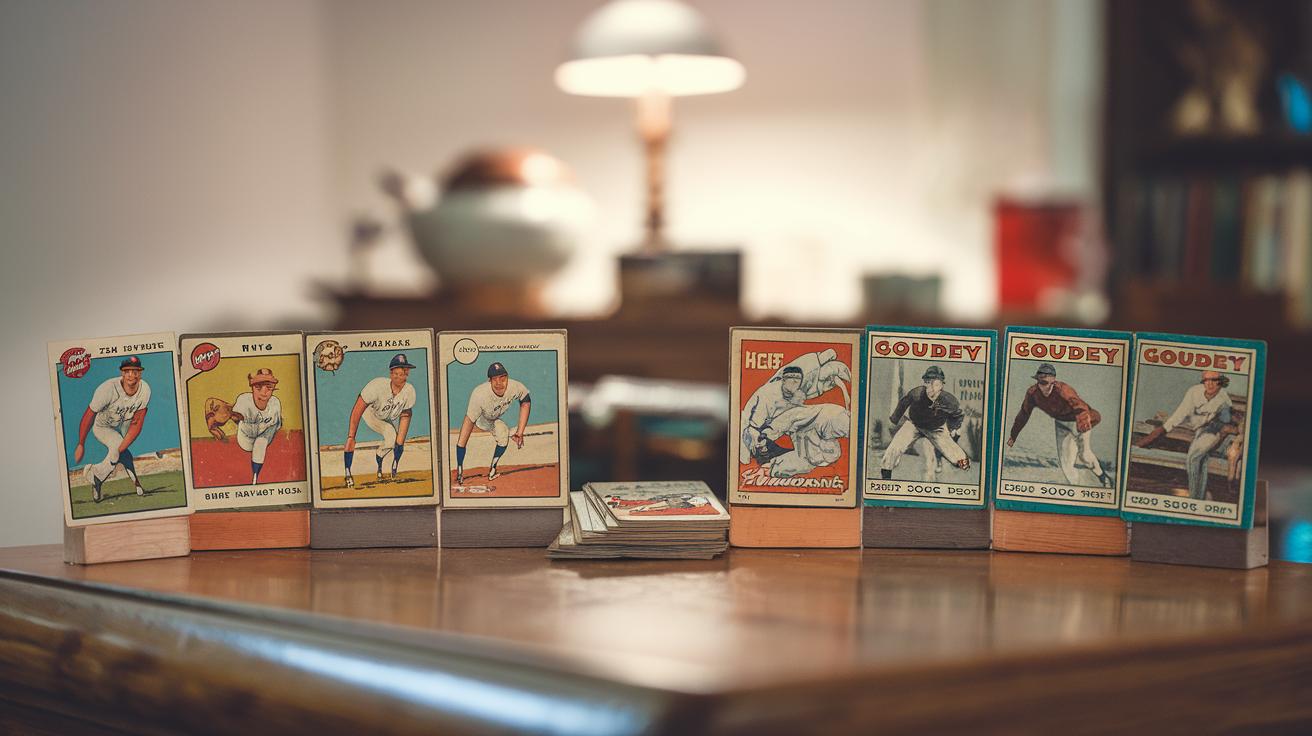
What makes vintage baseball cards historically significant? Vintage cards like the T206 series and the 1933 Goudey set hold substantial historical importance due to their connection with baseball's formative years and the legendary players they portray. The T206 series, issued between 1909 and 1911, is particularly renowned for featuring iconic players such as Honus Wagner and Ty Cobb. These cards are not only valued for their scarcity but also for the glimpse they offer into the early 20th-century baseball landscape.
The 1933 Goudey cards also represent a pivotal moment in baseball card history. Released during the Great Depression, these cards introduced vibrant and colorful designs that captivated collectors and fans alike. Featuring players like Babe Ruth and Lou Gehrig, the Goudey set is celebrated for its artistic appeal and the way it revolutionized card design with its innovative approach.
Why are cards featuring legendary players so collectible? Cards that feature legendary players are immensely collectible due to the players' enduring legacies and the nostalgia they invoke. Collectors are drawn to the stories and achievements of these athletes, which are encapsulated in the cards themselves. As a result, these cards become cherished pieces of sports history, connecting collectors to the past.
How has baseball card design evolved over the years? The evolution of baseball card design reflects broader changes in printing technology and cultural trends. Early cards, often simplistic and monochrome, gradually gave way to more sophisticated designs with color lithography. The Goudey set, for instance, marked a shift towards dynamic and colorful artistry, setting a standard for future releases. Over decades, card designs have continued to evolve, incorporating photography, holography, and digital elements, each iteration reflecting the era's technological advancements and aesthetic preferences.
Investing in Baseball Cards: Tips and Trends
What are the current trends in baseball card collecting? The baseball card market is experiencing a resurgence, driven by a combination of nostalgia and the increasing interest in collectibles as alternative investments. Digital cards and NFTs are emerging as a revolutionary trend, offering collectors a new dimension of ownership and engagement. These digital assets, while still in their infancy, are gaining traction for their ability to provide verifiable ownership and scarcity through blockchain technology.
How does player performance impact card value? Player performance is a critical determinant of a card's market value. Cards associated with players who achieve significant milestones or demonstrate exceptional skill are likely to appreciate. For instance, rookie cards of players who later become Hall of Famers tend to see substantial increases in value. Collectors should keep an eye on emerging talents and invest in cards that have the potential to benefit from a player's successful career trajectory.
What makes a baseball card a worthwhile investment? A worthwhile baseball card investment typically hinges on factors such as rarity, historical significance, and player legacy. Vintage cards, especially those from iconic series like the T206 or 1933 Goudey, are often considered strong investments due to their limited supply and historical value. Modern cards, particularly those featuring rookie players with high potential, also present promising opportunities. Additionally, cards in mint condition, as verified by grading services, tend to command higher prices.
Key considerations for investing in baseball cards:
- Rarity: Seek cards with limited prints or unique attributes.
- Player Performance: Focus on rookies with promising careers or established legends.
- Condition: Prioritize cards in excellent condition, ideally graded by reputable services.
- Market Trends: Stay informed about the latest trends, including digital cards and NFTs.
- Historical Significance: Invest in cards connected to significant moments or figures in baseball history.
Navigating the baseball card market requires strategic foresight and an understanding of both traditional and emerging trends. Collectors who leverage these insights can potentially benefit from both the financial and sentimental value of their collections.
Final Words
Exploring the top 10 baseball cards ever sold reveals the staggering values and historical significance intertwined within the sport. With legendary cards such as the 1952 Topps Mickey Mantle achieving astronomical prices, collectors are drawn by their rarity and the fame of the players depicted. Understanding the intricate factors of card conditions and auction dynamics is crucial for appreciating the full spectrum of these valuable collectibles. As market trends evolve and digital assets emerge, baseball cards continue to captivate collectors worldwide, preserving their place in history and culture.
FAQ
What are the top 10 most valuable baseball cards?
The top 10 most valuable baseball cards include the 1952 Topps Mickey Mantle and the T206 Honus Wagner. The 1952 Topps Mickey Mantle card sold for a record $12.6 million in 2022, highlighting its unmatched desirability.
What is the highest selling baseball card ever?
The highest selling baseball card is the 1952 Topps Mickey Mantle, which fetched $12.6 million in 2022. Its rarity, historical significance, and player's fame contribute to its record-breaking value.
What is the holy grail of baseball cards?
The holy grail of baseball cards is often considered the T206 Honus Wagner. Its immense rarity, with few known copies, and the legendary status of Honus Wagner make it exceptionally valuable.
What is the highest selling trading card of all time?
The highest selling trading card of all time is the 1952 Topps Mickey Mantle, sold for $12.6 million in 2022. Its unparalleled value stems from its scarcity and the iconic reputation of its featured player.
What factors influence the value of iconic baseball cards?
The value of iconic baseball cards is influenced by player fame, card rarity, condition, and historical context. Professional grading services like PSA evaluate these aspects to determine market value.
How do auction results reflect the baseball card market?
Auction results, like those from Heritage and Goldin, indicate market trends and collector demand. Record-breaking sales, such as the T206 Honus Wagner card for $6.6 million, underscore the market's dynamic nature.
What is the historical significance of vintage baseball cards?
Vintage cards like the T206 series and 1933 Goudey offer a glimpse into baseball's early days. Their classic designs and connections to legendary players like Babe Ruth enhance their cultural and collectible value.
What are some tips for investing in baseball cards?
Investors should monitor market trends, focus on vintage and rookie cards of Hall of Famers, and consider digital cards. Understanding player performance and card rarity is crucial for making informed investments.