

Is SpaceX ready to redefine lunar exploration with its unprecedented commercial lunar mission? With the recent launch of private landers, Blue Ghost and Resilience, SpaceX has embarked on a groundbreaking journey aimed at the moon. This monumental expedition is marked by the deployment of Starship, the most powerful rocket built for complete reusability, striving for a sustained lunar presence. Understanding the intricacies and timelines of SpaceX's lunar ambitions is crucial in unpacking the complexities of modern space exploration. This article delves into SpaceX's current mission plans, collaborations, and future milestones to shed light on whether a moon voyage is truly imminent.
SpaceX's Current Moon Mission Plans
Is SpaceX going to the moon soon? Yes, SpaceX has actively pursued lunar exploration through recent missions and future plans. The launch of two private lunar landers, Blue Ghost and Resilience, marks a pivotal step in commercial lunar endeavors. These missions represent the first time commercial vehicles have aimed for the moon, reflecting a significant shift in space exploration. The endeavor underscores SpaceX's commitment to contributing to lunar exploration and development. By using commercial landers, SpaceX not only broadens the scope of lunar missions but also paves the way for increased private sector involvement in space exploration.
The Starship program is central to SpaceX's lunar ambitions, offering unparalleled capabilities in terms of power and reusability. Starship is currently the most powerful rocket system ever constructed, designed for full and rapid reusability, which is crucial for cost-effective and sustainable lunar missions. This program plays a critical role in facilitating future lunar exploration by reducing launch costs and enabling more frequent and flexible lunar missions. SpaceX's plans for the moon include not just landing on the lunar surface but establishing a sustained presence, leveraging Starship's technological advancements to achieve these long-term goals.
- Launch of Blue Ghost and Resilience
- First commercial vehicle lunar landing attempt
- Starship's design for full reusability
- SpaceX's aim for a sustained lunar presence
Collaborations and Partnerships in SpaceX's Lunar Missions

SpaceX's lunar missions are deeply intertwined with strategic collaborations, the most prominent being with NASA. The Artemis Mission stands at the forefront of these partnerships, securing a critical role for SpaceX in the next phase of lunar exploration. SpaceX has been awarded a contract to develop a lunar lander, capable of transporting astronauts to the moon's surface, which underlines the trust and reliance NASA places in SpaceX's technological capabilities. This collaboration is pivotal for achieving the Artemis Mission's broader objectives, which include returning humans to the moon and establishing a sustainable presence there.
Beyond NASA, SpaceX actively seeks partnerships with various international organizations to bolster its lunar mission objectives. By engaging with different space agencies and private entities worldwide, SpaceX not only leverages a broader pool of expertise and resources but also aligns with global lunar exploration initiatives. These collaborations enhance technological exchange and foster a cooperative environment that is beneficial for advancing lunar exploration goals. SpaceX's willingness to work with diverse partners reflects a strategic approach to overcoming the complexities of lunar missions.
These partnerships significantly contribute to the overarching goals of lunar exploration, facilitating advancements that would be challenging to achieve independently. By collaborating with NASA and other international partners, SpaceX enhances its mission capabilities, ensuring comprehensive support and access to a wealth of knowledge and experience. This collaborative approach is essential for realizing both immediate mission objectives and long-term aspirations for sustainable lunar exploration and potential human settlement.
Timeline and Milestones for SpaceX's Lunar Missions
Is SpaceX going to the moon soon? Yes, the timeline for SpaceX's lunar missions indicates significant momentum toward achieving lunar exploration milestones. The Starship program, which has made substantial advancements, positions SpaceX for lunar exploration as early as 2025. This program is pivotal, not only due to its robust design but also because it sets a precedent for future lunar missions. The FAA's approval of 25 Starship launches from Starbase in the coming year underscores the program's readiness and the strategic emphasis on increasing launch frequency to expedite lunar mission timelines.
These developments are integral to SpaceX's long-term lunar goals. The Artemis mission, anticipated for 2027, represents a cornerstone in these plans, with critical uncrewed test missions planned beforehand to ensure the mission's success. These tests are vital for validating technology and mission protocols, thereby reducing risks associated with manned lunar landings. In addition, planned orbital refueling tests are crucial for demonstrating the feasibility of extended space missions, further reinforcing SpaceX's capability to sustain lunar exploration and potentially lead to the establishment of a human outpost on the moon.
- Starship program advancements in 2024
- Uncrewed test mission to the lunar surface
- Artemis mission in 2027
- FAA launch approval for 25 flights
- Orbital refueling tests
| Event | Date |
|——————————|——-|
| Starship Advancements | 2024 |
| Uncrewed Test Mission | 2025 |
| FAA Launch Approval | 2025 |
| Orbital Refueling Tests | 2025 |
| Artemis Mission | 2027 |
The Role of SpaceX's Starship in Lunar Exploration
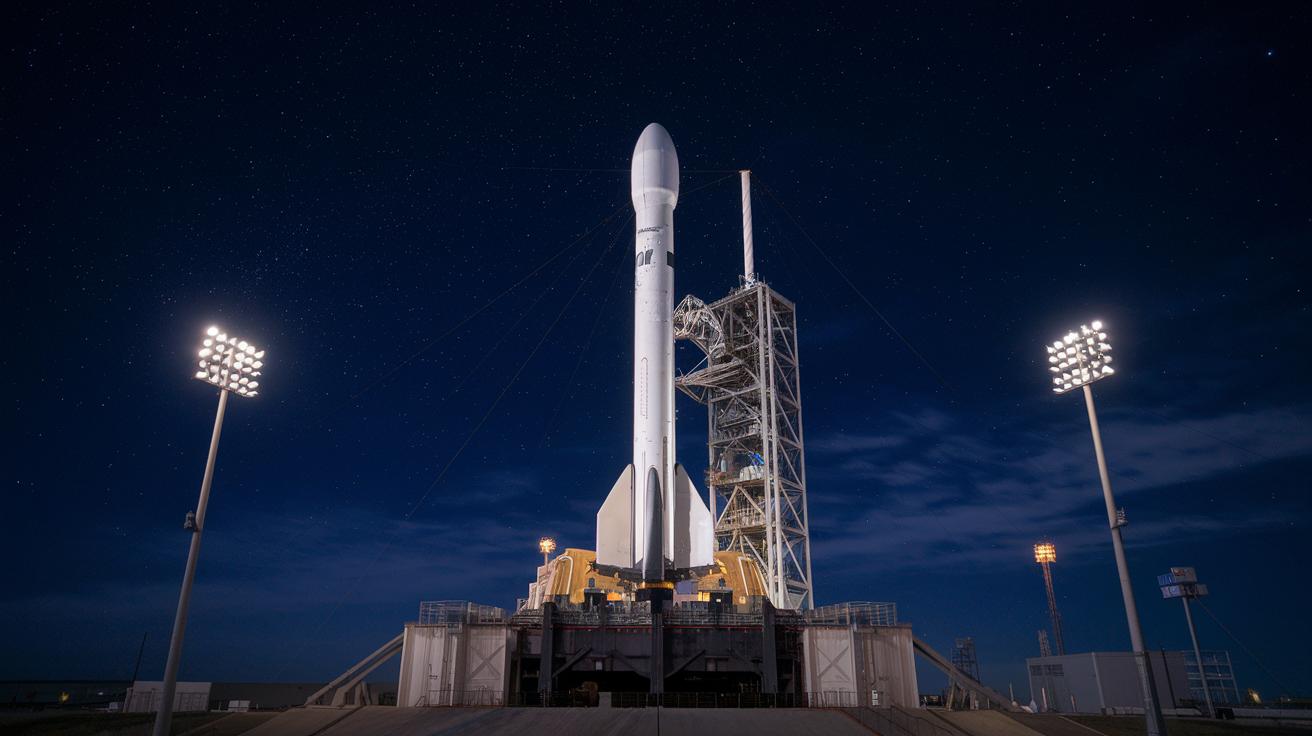
Is SpaceX sending a rocket to the moon? Yes, SpaceX's Starship plays a pivotal role in their lunar exploration plans. As the largest and most powerful rocket system ever developed, Starship is designed with full and rapid reusability in mind. This innovation is crucial for reducing the costs associated with lunar missions, allowing for more frequent and sustainable expeditions to the moon. By providing a cost-effective solution for transporting payloads and potentially humans to the lunar surface, Starship is set to revolutionize the logistics of space travel.
Recent developments in the Starship program have shown significant advancements, particularly in recovery strategies. SpaceX has successfully demonstrated the use of the launch tower's "chopsticks" to recover and stabilize the rocket upon return. This progress not only enhances the efficiency of the Starship system but also ensures the integrity and readiness of the spacecraft for subsequent missions. These advancements are vital for maintaining a rapid launch cadence, essential for achieving SpaceX's ambitious lunar goals.
How does Starship enhance lunar missions? The design of the Starship, with its emphasis on reusability and power, facilitates extensive lunar exploration. SpaceX's plan to conduct the first orbital refueling test with two Starship vehicles exemplifies this capability. Such tests are critical for establishing the feasibility of long-duration missions beyond Earth's orbit, which are necessary for sustained lunar exploration. Starship's robust design and technological innovations position it as a cornerstone of SpaceX's strategy to maintain a continuous presence on the moon.
- Full and rapid reusability
- Largest and most powerful rocket system
- Progress in recovery strategies
SpaceX's Future Lunar Ambitions and Challenges
Is SpaceX going to the moon soon? Yes, SpaceX is actively pursuing lunar missions as part of its broader space exploration goals. The company's long-term ambitions extend beyond lunar exploration to include eventual Mars settlement, leveraging Starship's unparalleled efficiency and reusability. A significant milestone in this journey is achieving a sustained lunar presence, which serves as a critical step towards more ambitious extraterrestrial endeavors. SpaceX envisions using the moon as a proving ground for technologies and strategies necessary for future interplanetary travel.
What challenges does SpaceX face in lunar landings? SpaceX encounters several obstacles, including technological challenges related to lunar landing systems and intense competition from NASA's Artemis program. The Artemis program, with its substantial investment in the SLS and Orion systems, presents a formidable benchmark in terms of technological prowess and funding. Additionally, SpaceX must develop cost-effective solutions to ensure that its missions remain financially viable while competing against NASA's well-funded initiatives. Successfully navigating these challenges requires innovative strategies and continued advancements in spaceflight technology.
- Competition with NASA's Artemis program
- Technological challenges in lunar landing
- Cost-effective solutions for space exploration
- Strategies for overcoming these challenges
Final Words
SpaceX's ambitious lunar mission plans demonstrate a commitment to pushing the boundaries of space exploration. The successful launch of the Blue Ghost and Resilience lunar landers signifies a groundbreaking moment as commercial entities make strides towards the moon. The Starship program's design, emphasizing full reusability, sets the stage for a sustained presence on the lunar surface.
Collaborations, notably with NASA under the Artemis Mission, amplify SpaceX's efforts in achieving its lunar objectives. The outlined timeline through 2027 underscores strategic progress, highlighting significant milestones that contribute to these goals.
Overcoming technological challenges while strategizing for cost-effective exploration remains crucial. As SpaceX continues advancing its lunar missions, the question "is SpaceX going to the moon?" finds an increasingly affirmative answer. This journey brings the promise of further advancing human space exploration.
FAQ
Is SpaceX going to the moon tonight?
SpaceX is not scheduled for a lunar mission tonight. Current plans include future missions that involve launching commercial lunar landers and the long-term use of Starship for lunar exploration.
Has SpaceX landed on the moon?
SpaceX has not directly landed on the moon yet. However, its Starship program and commercial lander missions, such as Blue Ghost and Resilience, aim to achieve this milestone in the near future.
What is the cost of a SpaceX moon trip?
The specific cost of a SpaceX moon trip varies based on mission objectives and partnerships. Generally, costs involve transportation, technology development, and partnerships, such as those with NASA's Artemis program.
What is SpaceX's moon launch schedule?
SpaceX’s moon launch schedule includes uncrewed test missions leading to potential manned missions by 2025, with significant collaborations like the Artemis mission slated for 2027.
Is SpaceX building a moon base?
Currently, SpaceX is not building a moon base, but the company’s advancements in reusable rockets and lunar landers form a foundation for future sustained lunar presence.
Why can't NASA go to the Moon anymore?
NASA faces budgetary and technological challenges that affect its independent lunar missions. Strategic partnerships like the Artemis program aim to address these hurdles collaboratively with entities such as SpaceX.
When will SpaceX go to Mars?
SpaceX aims to launch its first Mars missions in the late 2020s, leveraging the capabilities of the Starship program developed for lunar exploration and eventual Mars colonization.
Is SpaceX involved in the Artemis mission?
Yes, SpaceX plays a pivotal role in the Artemis mission, providing lunar landers to transport astronauts to the moon's surface as part of this significant collaboration with NASA.
What is the significance of launching commercial landers to the moon?
Launching commercial landers like Blue Ghost and Resilience represents a breakthrough in private space exploration, marking the first commercial attempts at a lunar landing and expanding possibilities for sustained lunar activities.