

When it comes to human ingenuity and exploration, one of the most fascinating feats is the monumental rise of the largest rockets ever crafted. These architectural giants not only defy gravity but redefine what's possible in space exploration. From the Cold War era's soaring R-7 to SpaceX's pioneering Starship, the evolution is marked by groundbreaking technological advances. This timeline meticulously chronicles each colossal leap in rocket development, highlighting specifications like height and thrust, showcasing how these titans of engineering have enabled us to reach the final frontier. Prepare to journey through history's grandest launches and glimpse humanity's relentless pursuit of the stars.
A Comprehensive Timeline of the Largest Rockets Ever Made
The history of space exploration is marked by a series of groundbreaking rockets, each representing a leap forward in engineering and innovation. The journey begins with the R-7 family of rockets, which launched Sputnik in 1957, marking the dawn of space travel. The Saturn V, introduced in 1967, remains a monumental figure in rocket history, having facilitated the Apollo missions to the moon. Meanwhile, the Space Shuttle, operational from 1981 to 2011, revolutionized space travel with its reusable design, providing a versatile platform for various missions.
The timeline of these monumental rockets is as follows:
- R-7 (1957): Height – 30 m, Mass – 267 tons, Payload Capacity – 500 kg, Thrust – 3,890 kN
- Saturn V (1967): Height – 110 m, Mass – 2,965 tons, Payload Capacity – 140,000 kg, Thrust – 34,500 kN
- Space Shuttle (1981): Height – 56 m, Mass – Variable, Payload Capacity – 24,400 kg to LEO, Thrust – 30,000 kN
- Energia (1987): Height – 60 m, Mass – 2,400 tons, Payload Capacity – 100,000 kg, Thrust – 35,130 kN
- Delta IV Heavy (2004): Height – 72 m, Mass – 733 tons, Payload Capacity – 28,370 kg to LEO, Thrust – 9,420 kN
- Falcon Heavy (2018): Height – 70 m, Mass – 1,420 tons, Payload Capacity – 63,800 kg to LEO, Thrust – 22,819 kN
- SLS (2022): Height – 111 m, Mass – 2,600 tons, Payload Capacity – 95,000 kg to LEO, Thrust – 39,000 kN
- Starship (2023): Height – 121 m, Mass – 5,000 tons, Payload Capacity – 150,000 kg, Thrust – 75,000 kN
These rockets have profoundly impacted space exploration, each contributing uniquely to our understanding and capabilities in the cosmos. The R-7 established the foundation of orbital mechanics, while the Saturn V propelled humanity to the moon. The Space Shuttle introduced reusability, significantly reducing costs and increasing mission frequency.
In recent years, rockets like Falcon Heavy and Starship have pushed the boundaries of payload capacity and power, heralding a new era of commercial space exploration. These advancements have not only made space more accessible but have also set the stage for ambitious future missions, including deep space exploration and potential colonization endeavors.
The Saturn V and Its Historic Role in Space Exploration
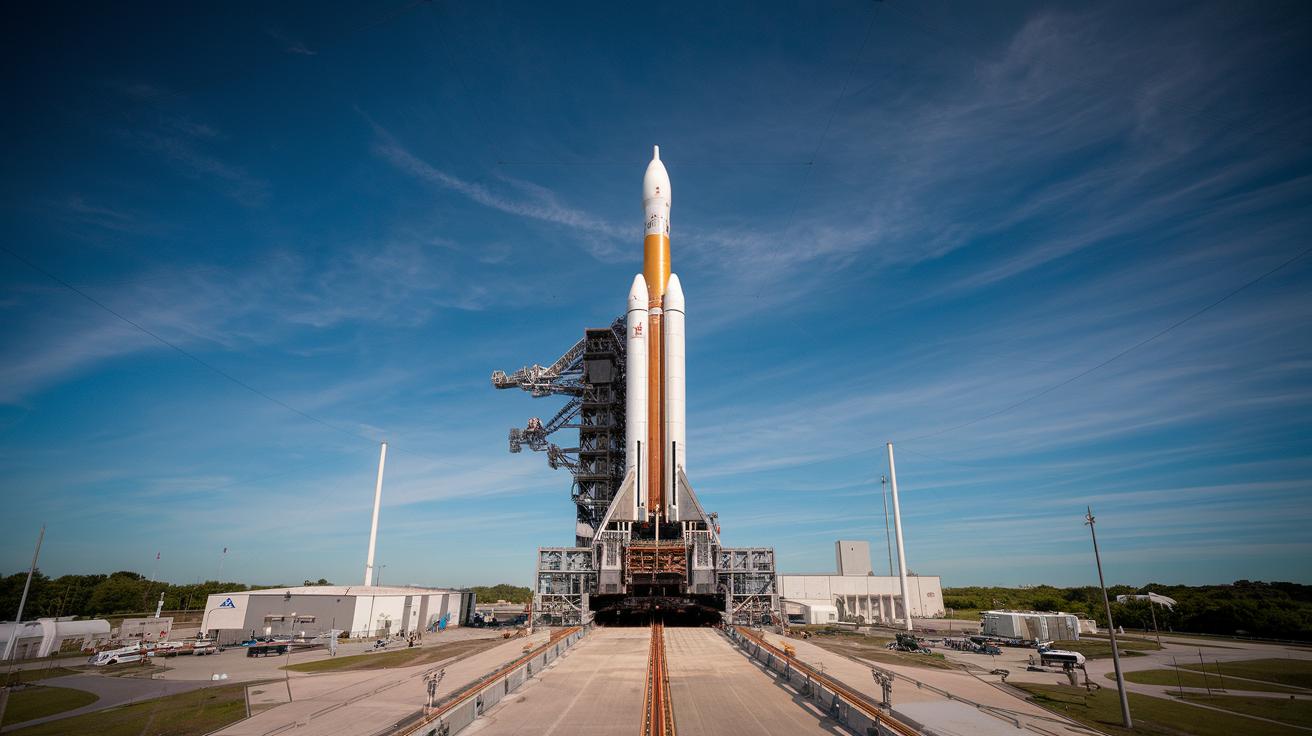
The Saturn V rocket stands as a monumental achievement in the annals of space exploration. As the largest rocket ever constructed, it was pivotal to the success of the Apollo missions, which were milestones in human space exploration. First launched in 1967, the Saturn V was a powerhouse of engineering, designed to propel astronauts to the moon—a feat achieved during the Apollo 11 mission in 1969. Its towering height of 363 feet, coupled with a massive payload capacity of 140,000 kilograms, enabled it to carry the necessary equipment and crew for lunar missions. The thrust generated by its engines was a staggering 34,500 kilonewtons, which was crucial for overcoming Earth's gravitational pull and ensuring the safe delivery of astronauts and their cargo to the lunar surface.
The Saturn V's contributions to space exploration extended beyond its physical capabilities. It served as the backbone of the Apollo program, facilitating a series of missions that expanded humanity's understanding of space and our place within it. The technical ingenuity behind the Saturn V set new standards for rocket design and performance, influencing subsequent generations of launch vehicles. In comparison to other rockets of its time, the Saturn V was unmatched in its ability to deliver large payloads to space, marking it as a quintessential component of the United States' efforts during the space race.
| Rocket | Height | Payload Capacity | Thrust |
|---|---|---|---|
| Saturn V | 363 ft | 140,000 kg | 34,500 kN |
| N1 | 344 ft | 95,000 kg | 45,400 kN |
| Proton | 174 ft | 23,000 kg | 10,000 kN |
Soviet Ambitions: The N1 and Energia Rockets
The Soviet N1 rocket was a pivotal component of the USSR's efforts to rival the United States during the historical space races. Designed to compete with NASA's Saturn V, the N1 was intended to facilitate crewed lunar missions. Despite its impressive design, featuring a thrust of 45,400 kilonewtons, the N1 faced insurmountable technical challenges. It underwent four launch attempts between 1969 and 1972, all of which ended in failure, primarily due to the complexity of its 30-engine first stage. These failures highlighted the engineering difficulties in creating a rocket of such magnitude, ultimately leading to the cancellation of the N1 program in 1976.
The Energia rocket, part of the Soviet Buran program, marked another ambitious step in Soviet rocketry. Launched successfully in 1987, Energia was designed to support the USSR's space shuttle ambitions, boasting a thrust of 35,130 kilonewtons. Unlike the N1, Energia was versatile, capable of carrying various payloads due to its modular design. Despite its technical success, Energia was launched only twice, largely due to the high costs and the political and economic challenges facing the Soviet Union during the late 1980s. These rockets exemplify the Soviet Union's significant aspirations in space exploration, underscoring the technological prowess and challenges of the era.
The Space Shuttle: A Reusable Revolution

The Space Shuttle program represented a groundbreaking era in aerospace engineering with its introduction in 1981. What made the Space Shuttle revolutionary was its reusable design, a significant departure from traditional expendable launch systems. By incorporating reusable components such as the orbiter and solid rocket boosters, the Space Shuttle reduced the cost per launch and increased mission frequency. This reusability was a milestone in propulsion technology, as it allowed for multiple missions with the same hardware, thereby economizing space travel and expanding the range of missions.
Key missions of the Space Shuttle included satellite deployment, scientific research, and assembly of the International Space Station (ISS). The Shuttle's adaptability enabled it to carry diverse payloads and conduct repairs in orbit. Notably, it facilitated the Hubble Space Telescope's launch and subsequent servicing missions, which were critical in advancing our understanding of the universe. The Shuttle's role in constructing the ISS underscored its engineering versatility and utility in complex, multi-phase space endeavors.
Over its 30-year operational life, the Space Shuttle program left an indelible legacy in the annals of space exploration. It elevated human presence in space, fostering international collaboration and technological innovation. The Shuttle's contributions extended beyond its missions; it inspired subsequent generations of reusable spacecraft, influencing modern commercial spaceflight initiatives. The program's achievements and challenges continue to inform the design and development of today's reusable rocket systems, cementing its place as a pivotal chapter in the history of space travel.
Modern Marvels: Falcon Heavy and Starship
SpaceX's Falcon Heavy represents a significant advancement in modern rocketry, exemplifying the shift towards powerful commercial launch vehicles. With a height of 230 feet and a thrust of 22,819 kilonewtons, Falcon Heavy is renowned for its ability to carry substantial payloads, reaching up to 63,800 kilograms to low Earth orbit (LEO). Its design incorporates three Falcon 9 boosters, allowing for enhanced thrust and payload capacity. This configuration not only highlights SpaceX's innovative approach to rocket design but also underscores a commitment to cost-effective and efficient space travel, facilitating a range of missions from satellite deployments to deep space explorations.
In 2023, SpaceX's Starship made headlines as it set new records in rocketry, despite facing challenges in achieving a successful orbit. Standing at an impressive height of 121 meters, Starship is designed to carry a payload of up to 150,000 kilograms, supported by a robust thrust of 75,000 kilonewtons. Starship's development is pivotal in SpaceX's mission to transform interplanetary travel, aiming to transport humans to Mars and beyond. Its fully reusable design marks a paradigm shift in commercial spaceflight, promising to drastically reduce costs and increase the frequency of launches. Starship's ongoing development and testing illustrate the ambitious trajectory of SpaceX's vision for the future of space exploration.
The emergence of Falcon Heavy and Starship signals a transformative era in commercial space exploration, characterized by increased payload capabilities and revolutionary designs. These rockets represent significant milestones in aerospace technology, pushing the boundaries of what is possible in terms of payload delivery and mission scope. The following are key features and achievements of each rocket:
- Falcon Heavy: Stands at 230 feet, thrust capacity of 22,819 kN, payload to LEO of 63,800 kg.
- Starship: Height of 121 meters, thrust of 75,000 kN, payload capacity of 150,000 kg.
- Reusability: Both rockets emphasize reusability, reducing launch costs.
- Mission Scope: Capable of diverse missions, from satellite launches to potential Mars colonization.
- Technological Innovation: Reflects SpaceX's advancements in rocket engineering and design.
Delta IV Heavy and the Pursuit of Payload Power

The Delta IV Heavy represents a hallmark in the evolution of rocket technology, emphasizing payload capacity and versatility. First launched in 2004, this rocket stands at 236 feet tall and has established itself as a formidable contender in the realm of heavy-lift launch vehicles. Its design allows it to carry substantial payloads, supporting a wide array of missions, from deploying military satellites to facilitating scientific explorations. With capabilities that rival and, in certain aspects, surpass the Space Shuttle, the Delta IV Heavy has become a cornerstone of modern space missions, enabling the deployment of large payloads into various orbits.
In the context of advancements in rocket technology, the Delta IV Heavy showcases the ongoing pursuit of enhanced payload power. Its configuration, which utilizes three Common Booster Cores, delivers the necessary thrust to transport payloads weighing up to 28,370 kilograms to low Earth orbit (LEO). This capability places it among the most powerful rockets currently in operation, reflecting significant innovations in engineering and design. The following table compares the Delta IV Heavy's payload capacity with other notable rockets, underscoring its prominent role in contemporary space endeavors.
| Rocket | Payload Capacity (kg) |
|---|---|
| Delta IV Heavy | 28,370 |
| Space Shuttle | 24,400 |
| Falcon Heavy | 63,800 |
NASA's SLS: The Future of Deep Space Missions
What is the SLS rocket, and why is it significant? The Space Launch System (SLS) is slated to be the most powerful rocket ever constructed, standing at over 320 feet tall. It is engineered to propel the Orion space capsule and other payloads beyond low Earth orbit, playing a pivotal role in NASA's Artemis program. The rocket's design emphasizes versatility and power, with a focus on enabling deep space missions. Its development aims to support a spectrum of explorations, from lunar landings to potential human missions to Mars, marking a new chapter in human spaceflight capabilities.
What are the mission goals of the SLS? The primary mission goals of the SLS include facilitating NASA's Artemis program, which seeks to return humans to the moon and establish a sustainable presence there by the late 2020s. The SLS will transport astronauts aboard the Orion spacecraft, along with essential cargo for lunar exploration. Additionally, it is poised to serve as a launching platform for future missions to Mars and beyond, providing the necessary lift and payload capacity for interplanetary travel. This ambitious agenda underscores the SLS's strategic importance in expanding humanity's reach into the solar system.
How will the SLS impact future space exploration? The SLS is expected to significantly impact future space exploration by offering unprecedented payload capacities and mission versatility. Its ability to launch heavy payloads into deep space will enable more extensive scientific research and exploration, paving the way for new discoveries. The SLS's role in the Artemis program also highlights its potential to foster international collaboration, as NASA partners with other space agencies and commercial entities to achieve shared exploration goals. By setting new standards in rocket performance and capability, the SLS is poised to shape the future trajectory of human and robotic exploration in space.
Comparing the Giants: Rocket Size and Performance

How do the Saturn V, Falcon Heavy, and Starship compare in terms of size and performance? The Saturn V, standing at 363 feet, was the tallest and most powerful rocket in its time, with a payload capacity of 140,000 kg to low Earth orbit (LEO) and a thrust of 34,500 kN. It was instrumental in launching the Apollo missions, marking a significant milestone in human space exploration. The Falcon Heavy, developed by SpaceX, measures 230 feet in height with a thrust of 22,819 kN and can deliver a payload of up to 63,800 kg to LEO. Its innovative design incorporates three Falcon 9 boosters, highlighting SpaceX's commitment to cost-effective space travel. Starship, another SpaceX marvel, aims to redefine interplanetary travel with its 121-meter height, a thrust of 75,000 kN, and a payload capacity of 150,000 kg, pushing the boundaries of current rocket technology.
What innovations have these rockets introduced to the field of rocketry? The Saturn V set the benchmark for heavy-lift capabilities, pioneering multi-stage rockets designed for lunar missions. Its success paved the way for future advancements in rocket design. Falcon Heavy introduced the concept of reusability, significantly reducing launch costs and enhancing the feasibility of frequent missions. Starship takes this a step further with a fully reusable design, intended to enable human colonization of Mars and beyond. These rockets illustrate the evolution of launch vehicle innovations, reflecting the growing emphasis on sustainability and cost-effectiveness in space exploration.
- Saturn V: Height – 363 feet, Payload to LEO – 140,000 kg, Thrust – 34,500 kN
- Falcon Heavy: Height – 230 feet, Payload to LEO – 63,800 kg, Thrust – 22,819 kN
- Starship: Height – 121 meters, Payload to LEO – 150,000 kg, Thrust – 75,000 kN
- Reusability: Both Falcon Heavy and Starship emphasize reusable components, reducing costs.
- Mission Capabilities: Designed for diverse missions, from lunar landings to interplanetary travel.
- Technological Advancements: Starship's fully reusable design represents the next leap in rocket engineering.
Historical Challenges and Innovations in Rocket Development
What are some key advancements in rocket technology? The evolution of rocket technology has been marked by significant developments in propulsion systems. Early rockets relied on basic liquid fuel engines, but innovations led to the creation of more efficient and powerful engines, such as those used in the Saturn V and the Space Shuttle. The introduction of cryogenic propellants, as seen in the Space Launch System (SLS), has further pushed the boundaries of propulsion efficiency and capability, enabling rockets to carry heavier payloads over greater distances.
How have the stages of rocket design evolved over time? Rocket design has progressed through several stages, each addressing the limitations of its predecessors. Initially, rockets featured simple, single-stage designs that limited their range and payload capacity. The development of multi-stage rockets, such as the Saturn V and Falcon Heavy, revolutionized space travel by allowing stages to be discarded once their fuel was expended, reducing weight and increasing efficiency. This innovation greatly expanded the potential for deep space missions and interplanetary travel.
What technological breakthroughs have enabled modern rocketry? Breakthroughs in materials science, computer modeling, and aerodynamics have all contributed to advancements in rocket development. The use of lightweight composite materials has reduced overall rocket weight, enhancing lift capabilities. Meanwhile, sophisticated computer simulations have optimized flight paths and structural integrity, improving reliability and safety. Aerodynamic advancements have also minimized drag, ensuring that rockets like SpaceX's Starship can achieve higher speeds and greater efficiency. These technological strides have collectively laid the foundation for the ambitious goals of modern space exploration, including potential missions to Mars and beyond.
The Role of International Collaboration in Rocketry
How has international collaboration influenced the development of rockets? International collaboration has been instrumental in advancing the field of rocketry, bringing together diverse expertise and resources from across the globe. The most prominent example of such collaboration is the International Space Station (ISS), a joint effort among space agencies including NASA, Roscosmos, ESA, JAXA, and CSA. This cooperative venture has enabled the pooling of financial, technological, and human resources, fostering significant advancements in space exploration and technology. By working together, these agencies have achieved scientific breakthroughs that would be challenging for any single country. The ISS serves as a model for how international partnerships can enhance the scope and impact of space missions, promoting a spirit of unity and shared goals.
What contributions have international collaborations made to global space exploration? These collaborations have not only advanced rocketry and space technology but have also facilitated a global exchange of knowledge and expertise. Joint missions, such as those conducted on the ISS, have allowed scientists and engineers from different nations to work together, sharing insights and innovations that drive technological progress. This collaborative approach has led to the development of more sophisticated and reliable rocket systems, enabling missions that reach further and achieve more than ever before. Furthermore, international partnerships in space exploration have inspired a generation of scientists and engineers, laying the groundwork for future endeavors that will continue to expand humanity's reach into the cosmos.
Final Words
Exploring the largest rockets ever made provides a rich narrative on the evolution of space exploration. From the pioneering R-7 and the monumental Saturn V to SpaceX's innovations, the timeline reflects significant advancements in rocket engineering and payload capacities. These developments underscore the ambition and technical prowess driving humanity's journey into space.
Despite the challenges faced, the strides in modern rocketry like Falcon Heavy and Starship emphasize an era of unprecedented opportunity in commercial spaceflight. The continuous pursuit of innovation ensures that the legacy of these engineering marvels will inspire future exploration endeavors and advancements in rocket technology.
FAQ
What was the largest rocket ever made?
The Saturn V rocket was the largest ever built. It stood 363 feet tall, had a payload capacity of 140,000 kg, and produced a thrust of 34,500 kN, powering the Apollo lunar missions.
Is the Saturn V the largest rocket ever built?
Yes, the Saturn V holds the distinction of being the largest rocket ever constructed, crucial for the success of the Apollo missions to the moon between 1967 and 1973.
What is the largest rocket never launched?
The Soviet N1 was the largest rocket never successfully launched. It had a thrust capacity of 45,400 kN but failed to reach orbit in all launch attempts.
What rocket has been launched the most times?
The Space Shuttle program has seen the most launches, completing 133 successful missions over 30 years before its retirement in 2011.
Which is the most powerful rocket in the world?
SpaceX's Starship is designed to be the most powerful, with a thrust of 75,000 kN and a payload capacity of 150,000 kg, demonstrating advanced commercial space capabilities.
What are the most powerful rockets by thrust?
Starship stands at 75,000 kN, followed by the N1 (45,400 kN), Energia (35,130 kN), and Saturn V (34,500 kN), showcasing key advancements in thrust over time.
What is the NASA biggest rocket in the world?
The Space Launch System (SLS) is set to be NASA's biggest, designed to support deep space missions and the Artemis program with its towering height and massive payload capacity.
How does Starship compare to Falcon Heavy?
Starship surpasses Falcon Heavy in power and capacity, with greater thrust (75,000 kN versus 22,819 kN) and payload capabilities, marking it as a major advancement in spaceflight technology.
What is the significance of SpaceX's Falcon Heavy?
Falcon Heavy is known for its powerful payload capabilities, standing 230 feet tall with a thrust of 22,819 kN, making it a key player in commercial space endeavors.
Why was the Space Shuttle program revolutionary?
The Space Shuttle marked a pivotal shift with its reusable spacecraft design, executing various missions between 1981 and 2011, reducing costs and expanding the possibilities for human spaceflight.