

Is your WiFi struggling to keep up with the demands of modern technology? As 2025 unfolds, the best mesh net WiFi systems promise unparalleled connectivity, revolutionizing how households and businesses experience the internet. With an array of advanced features, these top-performing systems not only extend coverage but also integrate seamlessly with smart homes. In this comprehensive guide, The Mind Blender reveals the top picks that stand out for their speed, coverage, and user-friendly interfaces. Dive into the details and discover which mesh WiFi system is your ultimate solution for a lag-free, interconnected world.
Discover the Best Mesh Net WiFi Systems of 2025
TP-Link Deco X90 emerges as one of the premier choices for 2025, hailed for its outstanding speed and comprehensive coverage. It utilizes Wi-Fi 6 technology to deliver seamless connectivity across expansive areas, reducing dead zones and enhancing user experience. This system is particularly effective for large homes requiring robust and consistent internet performance. Meanwhile, the Netgear Orbi RBK753 is a compelling option for those seeking a balance between budget and performance, offering reliable connectivity with sufficient coverage for medium-sized homes.
The TP-Link Deco W7200 stands out for its Wi-Fi 6E support, providing advanced connectivity features that cater to the latest smart home devices. It blends performance with value, making it a versatile choice for tech-savvy users who prioritize both speed and future-proofing their network. Asus ZenWiFi AX (XT8) is another frontrunner in the top mesh network category, known for its tri-band connectivity that optimizes network traffic and reduces congestion, ensuring high-speed internet for multiple devices simultaneously.
Google Nest Wifi Pro offers a unique blend of user-friendly setup and smart home integration capabilities. Its Wi-Fi 6E support ensures it remains a competitive choice for users who want to integrate their network with Google Assistant-powered devices. It combines ease of use with advanced features, making it perfect for users who prioritize smart home functionality.
- TP-Link Deco X90: Exceptional speed and coverage, ideal for large homes.
- Netgear Orbi RBK753: Budget-friendly with reliable performance for medium-sized homes.
- TP-Link Deco W7200: Wi-Fi 6E support, balancing performance and value.
- Asus ZenWiFi AX (XT8): Tri-band connectivity for optimized traffic and reduced congestion.
- Google Nest Wifi Pro: Easy setup with smart home integration and Wi-Fi 6E support.
Key Features of 2025's Leading Mesh WiFi Systems
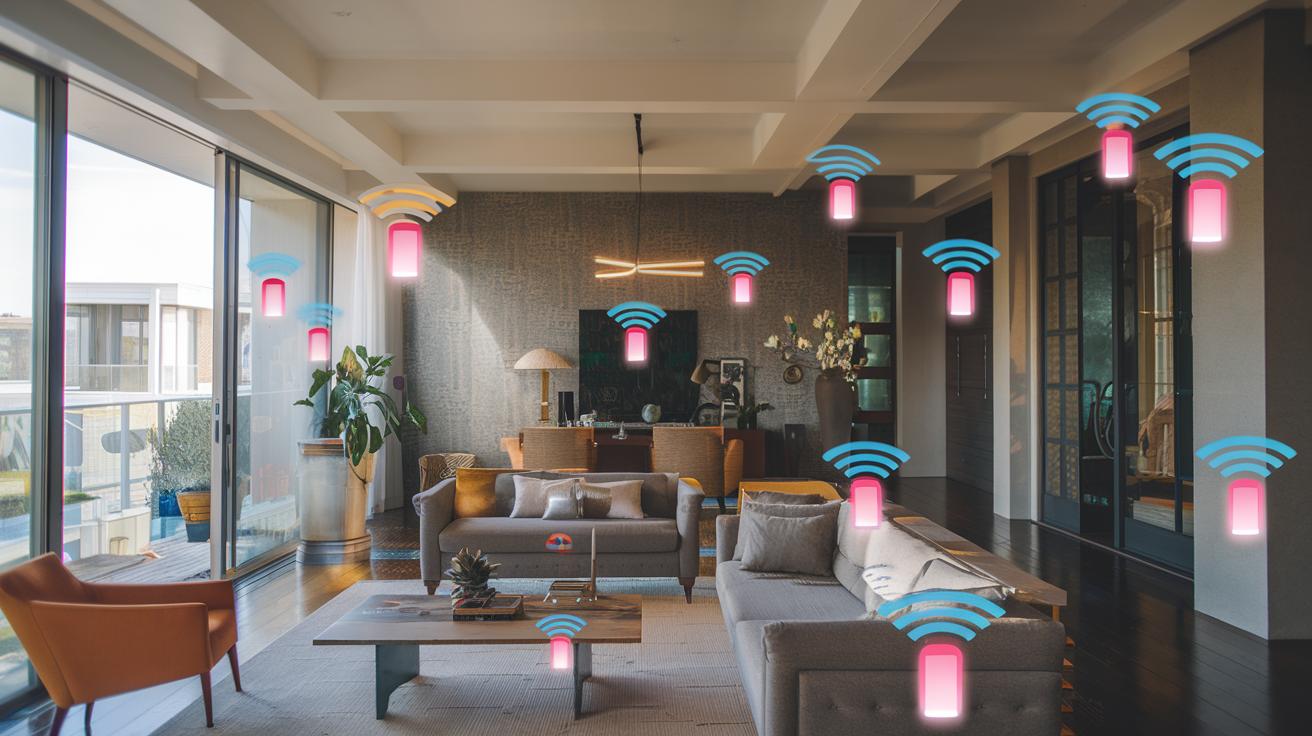
What are the standout features of mesh WiFi systems in 2025? The primary advancements include enhanced security measures, seamless setup processes, and the inherent advantages of mesh networks, such as comprehensive coverage and the elimination of dead zones. These systems incorporate cutting-edge technologies like Wi-Fi 6E, which supports higher bandwidth, ensuring faster data transmission and reduced latency. This development is crucial for smart home environments where numerous devices operate simultaneously. Advanced security features, including robust parental controls and guest network capabilities, provide users with greater control over their networks, safeguarding personal data and managing internet access effectively.
Why is ease of setup vital in choosing a mesh WiFi system? User-friendly installation processes are pivotal for ensuring quick and hassle-free deployment. With intuitive mobile apps, users can configure their networks effortlessly, monitor connectivity, and manage device usage. The integration of smart home systems further enhances user experience by allowing seamless communication between IoT devices. This integration not only optimizes network efficiency but also supports a vast array of smart technology, contributing to a more cohesive and efficient home environment.
- Advanced Security: Robust parental controls and guest network support.
- Wi-Fi 6E Compatibility: Enhanced bandwidth and reduced latency for smart homes.
- Seamless Setup: User-friendly mobile apps simplify installation and management.
- Elimination of Dead Zones: Comprehensive coverage ensures consistent connectivity.
- Smart Home Integration: Supports extensive IoT device communication.
- Network Efficiency: Optimized for simultaneous multi-device operation.
Comparing Mesh WiFi and Traditional Extenders
When considering network expansions, how do mesh WiFi systems outperform traditional range extenders? Mesh WiFi systems excel by providing seamless connectivity across expansive areas, eliminating the need for manual network switching. They create a single, unified network that automatically routes devices to the strongest signal, ensuring consistent performance without dead zones. In contrast, traditional range extenders often require separate network names (SSIDs), which can lead to connectivity disruptions as users move between coverage areas. This can result in a fragmented user experience as devices may cling to weaker signals from the main router.
Why are mesh systems often a more reliable investment for comprehensive home coverage? Mesh networks are designed with ease of use and scalability in mind, making them ideal for homes requiring robust, widespread coverage. They allow for straightforward expansion by simply adding more nodes to the network without complex setups. On the other hand, range extenders can introduce latency and reduced speeds due to their method of rebroadcasting signals, often leading to subpar performance in larger homes. Mesh systems also support advanced features like Wi-Fi 6E, enhancing their future-proofing capabilities and overall user experience.
| Feature | Mesh WiFi | Range Extender |
|——————–|——————————————-|—————————————-|
| Coverage | Seamless and extensive | Limited and fragmented |
| Ease of Use | Simple setup, unified network | Complex setup, multiple SSIDs |
| Performance | Consistent, high-speed | Potential latency, reduced speed |
| Scalability | Easily expandable with additional nodes | Limited, requires multiple extenders |
Mesh WiFi for Smart Homes: Integration and Benefits

How do mesh WiFi systems enhance smart home integration? Mesh WiFi systems provide a robust backbone for smart home environments, facilitating seamless communication between smart devices. With their ability to support a wide range of IoT devices, these systems ensure that smart thermostats, lights, and security cameras operate efficiently without connectivity hiccups. By delivering consistent and reliable internet coverage throughout the home, mesh networks eliminate the dead zones that can disrupt device functionality and user experience. This integration ensures that all smart home components communicate effortlessly, optimizing the performance and reliability of smart home systems.
Why are mesh WiFi systems pivotal for improved IoT device connectivity? The architecture of mesh WiFi allows devices to connect to the nearest node, rather than relying on a single central router. This means that smart devices can maintain strong and stable connections, even if they are positioned far from the main internet source. Mesh systems typically feature advanced protocols that prioritize smart home traffic, ensuring that critical devices receive the bandwidth they need to function optimally. This prioritization is crucial for applications like streaming security footage or controlling smart home appliances, where any delay can impact functionality.
- Enhanced IoT Device Connectivity: Ensures stable and reliable connections for all smart devices.
- Seamless Communication: Facilitates efficient interaction between various smart home devices.
- Elimination of Dead Zones: Provides consistent coverage throughout the home.
- Optimized Network Performance: Prioritizes smart home traffic for improved efficiency.
- Scalability: Easily expandable to accommodate more devices as smart home systems grow.
Evaluating Mesh WiFi Performance: Speed and Coverage
How do mesh WiFi systems achieve superior speed and coverage? By utilizing gigabit speeds and tri-band connectivity, mesh WiFi systems offer enhanced performance metrics. Gigabit speeds allow for rapid data transmission, which is crucial for high-bandwidth applications like streaming and gaming. Tri-band connectivity, featuring two 5GHz bands alongside a 2.4GHz band, reduces network congestion by allowing multiple devices to connect simultaneously without compromising speed. This configuration ensures that even in homes with numerous devices, the network maintains its integrity and speed, providing a seamless experience for users.
What role does signal strength play in a mesh WiFi system's performance? Signal strength is a critical factor that determines the consistency and reach of a network. Systems using advanced technologies such as beamforming and high-gain antennas can target devices more effectively, enhancing signal strength and coverage. This ensures that even the farthest corners of a home receive reliable connectivity, eliminating dead zones. Mesh systems like the TP-Link Deco X90 and Netgear Orbi RBKE963 exemplify this with their ability to provide extensive coverage while maintaining strong signal strength across all nodes, making them ideal for large homes.
Which systems excel in performance metrics? The TP-Link Deco X90 and Asus ZenWiFi AX (XT8) are notable for their impressive speed and coverage. The Deco X90's use of Wi-Fi 6 technology and gigabit support allows it to deliver exceptional performance, while the ZenWiFi AX (XT8)'s tri-band setup ensures efficient data distribution across devices. Such systems exemplify the advantages of modern mesh networks, offering robust and reliable performance that supports high-speed internet access and seamless connectivity throughout the home.
| System | Speed | Coverage | Signal Strength |
|———————–|—————–|——————|———————|
| TP-Link Deco X90 | Gigabit speeds | Extensive | Strong |
| Netgear Orbi RBKE963 | Gigabit speeds | Wide | Very strong |
| Asus ZenWiFi AX (XT8) | Tri-band speeds | Comprehensive | Excellent |
| Google Nest Wifi Pro | High speeds | Broad | Reliable |
| TP-Link Deco W7200 | Wi-Fi 6E speeds | Expansive | Consistent |
Affordable Mesh WiFi Solutions for Every Home

What are some affordable mesh WiFi options in 2025 that deliver excellent performance without breaking the bank? The TP-Link Deco BE2 and Netgear Orbi RBK753 are standout choices, offering robust connectivity and expansive coverage at a reasonable price point. These systems are designed to provide reliable internet access throughout the home, catering to the increasing demand for stable connections in our digital age. The TP-Link Deco BE2, for instance, supports up to 150 devices and offers up to 6,600 square feet of coverage, making it an excellent choice for homes with extensive networking needs. The emphasis on value does not compromise quality, as these systems incorporate technologies like Wi-Fi 6 to enhance speed and user experience.
How do these affordable systems align with current home networking trends emphasizing cost-effectiveness? As more households integrate smart devices, the need for efficient and budget-friendly networking solutions has grown. Systems like the Netgear Orbi RBK753 cater to these needs by providing reliable performance in medium-sized homes. With its capacity to deliver seamless connectivity, it aligns with the trend of integrating multiple devices into a unified network. These systems not only focus on affordability but also maintain a balance between cutting costs and delivering high-quality internet coverage, ensuring users can enjoy uninterrupted access across their homes.
- TP-Link Deco BE2
- Netgear Orbi RBK753
- Eero 6+
- Tenda Nova MW6
Setting Up Your Mesh Network: A User-Friendly Experience
How can users ensure a seamless setup process for their mesh WiFi systems? Utilizing a mobile app is key, as these apps provide step-by-step guidance and real-time feedback to streamline the installation. Systems like the Google Nest Wifi Pro and TP-Link Deco series are equipped with intuitive mobile apps that simplify network management, allowing users to configure settings, monitor performance, and manage connected devices without technical expertise. The mobile app control not only reduces setup time but also enhances user experience by offering a centralized platform for ongoing network adjustments.
What design features contribute to a user-friendly mesh WiFi setup? Systems with plug-and-play capabilities and minimalistic designs, such as the Netgear Orbi and Eero models, make installation straightforward. These systems often come with pre-synced nodes, eliminating the need for complex configurations. The user-friendly design ensures that even those unfamiliar with networking can achieve optimal setup with ease. By focusing on simplicity and accessibility, manufacturers help users establish robust networks that meet their connectivity needs efficiently.
-
Use the manufacturer's mobile app for step-by-step setup instructions and network management.
-
Ensure nodes are placed strategically for optimal coverage, avoiding interference from electronic devices.
-
Take advantage of pre-synced nodes for a hassle-free installation, reducing the need for manual configuration.
Advanced Security Features in Mesh WiFi Systems

Why are advanced security features crucial in mesh WiFi systems? They are essential for protecting user data and maintaining network integrity. Parental controls, for instance, allow users to manage internet access for various devices, ensuring a safe browsing environment for children. This feature is particularly important for families with young users who need controlled access to online content. Parental controls not only help in monitoring internet usage but also provide peace of mind by preventing exposure to inappropriate content.
What role do guest network support and data encryption play in enhancing network security? Guest network support allows visitors to connect to the internet without accessing the main network, thereby isolating sensitive data and devices. This feature is vital for maintaining the privacy and security of the primary network. Data encryption, on the other hand, safeguards information transmitted over the network, preventing unauthorized access and data breaches. Together, these features form a robust security framework, crucial for protecting personal and sensitive information from cyber threats.
- Parental Controls: Manage internet access and ensure safe browsing.
- Guest Network Support: Isolate visitor access to protect main network data.
- Data Encryption: Secure data transmission and prevent unauthorized access.
- Automatic Firmware Updates: Keep security protocols up-to-date to defend against new threats.
Tailoring Mesh WiFi Systems for Large Homes
How can mesh WiFi systems effectively extend network coverage in large homes? Mesh WiFi systems excel in covering expansive areas by deploying multiple nodes that communicate seamlessly with each other, each node acting as an additional access point to blanket the home with strong and consistent Wi-Fi signals. Systems like the Netgear Orbi RBKE963 are specifically designed for large spaces, offering wide-ranging coverage and high-speed internet access throughout large homes. This system includes a dedicated backhaul band, ensuring that the main network bandwidth is used solely for connected devices, enhancing overall performance and minimizing congestion.
What role do customizable settings play in optimizing mesh WiFi systems for large homes? Customizable settings are crucial for tailoring the network to specific home layouts and usage requirements. Advanced configuration options, like setting up separate SSIDs for different areas or adjusting channel widths, allow users to optimize network performance based on their unique home environment. Customization can also involve prioritizing bandwidth for specific devices or applications, ensuring that critical devices receive adequate resources even during peak usage times. These features are vital for maintaining optimal performance across all connected devices in large homes, where network demands are often high.
-
Strategically Place Nodes: Position nodes centrally to eliminate dead zones and ensure comprehensive coverage throughout the home.
-
Use a Dedicated Backhaul: Opt for systems with dedicated backhaul bands, such as the Netgear Orbi RBKE963, to prevent network congestion.
-
Adjust Channel Widths: Customize channel settings to reduce interference and maximize throughput in high-density areas.
-
Enable Band Steering: Allow devices to automatically connect to the best available band (2.4GHz, 5GHz, or 6GHz) for optimal performance.
-
Prioritize Critical Devices: Use Quality of Service (QoS) settings to allocate bandwidth to devices that require high-speed connections.
Expert Recommendations and User Testimonials for Mesh WiFi Systems

How do experts rate the top-performing mesh WiFi systems of 2025? According to industry specialists, the TP-Link Deco X90 consistently ranks as a leading choice due to its exceptional speed and expansive coverage, making it ideal for large homes. Experts commend its Wi-Fi 6 technology, which ensures seamless connectivity and reduces dead zones. Similarly, the Asus ZenWiFi AX (XT8) garners praise for its tri-band connectivity, which optimizes network traffic and minimizes congestion, maintaining high-speed internet for multiple devices. Expert reviews highlight its robust performance in medium to large homes, emphasizing its reliability in providing consistent internet access.
What do real-life users say about these systems? User testimonials frequently highlight the Google Nest Wifi Pro for its user-friendly setup and integration with smart home devices. Customers appreciate its Wi-Fi 6E support, which future-proofs their networks while enhancing smart home functionality. Reviews consistently mention the system's ease of use, making it a favorite amongst tech enthusiasts and novices alike. The Netgear Orbi RBK753 also receives positive feedback for its balance of affordability and performance, offering reliable coverage for medium-sized homes. Users appreciate the straightforward installation process and the system's ability to deliver stable connectivity across various devices, underscoring the importance of customer satisfaction in influencing purchase decisions.
- TP-Link Deco X90: Praised for speed and coverage; excellent choice for large homes.
- Asus ZenWiFi AX (XT8): Known for tri-band connectivity and reliability in reducing congestion.
- Google Nest Wifi Pro: Highlighted for ease of setup and smart home integration capabilities.
Final Words
The exploration of the best mesh net WiFi 2025 highlights the evolution in connectivity solutions. Mesh systems like TP-Link Deco X90 and Netgear Orbi RBK753 represent the pinnacle of speed and expansive coverage. With their advanced security features and seamless smart home integration, these systems cater to modern network demands efficiently. Comparing mesh WiFi to traditional extenders underscores its superiority in providing consistent performance and coverage. Embracing these systems ensures robust support for smart devices. Investing in mesh WiFi not only optimizes connectivity but also enhances the digital experience in every home.
FAQ
Best Mesh Network WiFi 2025 Reddit and Gaming?
The best mesh WiFi systems for 2025, popular on Reddit and for gaming, include the TP-Link Deco X90, Netgear Orbi RBK753, and Asus ZenWiFi AX (XT8). These provide high-speed connectivity and excellent coverage.
Best Mesh WiFi for Thick Walls?
For thick walls, the Asus ZenWiFi AX (XT8) and Netgear Orbi RBK753 are recommended. They offer stronger signals and superior wall-penetration capabilities, ensuring consistent performance in challenging environments.
Best Mesh WiFi 6 and WiFi 7 Systems?
Top WiFi 6 mesh systems include the TP-Link Deco X90 and Asus ZenWiFi AX (XT8). For WiFi 7, systems like the Google Nest Wifi Pro lead the market with advanced speed and connectivity features.
Who Makes the Best WiFi Mesh Systems?
Leading manufacturers like TP-Link, Netgear, Asus, and Google produce top mesh systems. They focus on innovation, performance, and reliability, making them popular choices for various needs.
Major Disadvantage of a Mesh Network?
A major disadvantage of mesh networks is their cost, which can be higher than traditional routers. Additionally, they may require more nodes to cover large areas effectively, increasing setup complexity and expense.
Longevity of Mesh WiFi Systems?
Mesh WiFi systems typically last 3 to 5 years. Their lifespan depends on technological advancements and changes in network standards, which might necessitate upgrading to newer models for optimized performance.
Choosing Between WiFi 5 or 6 Mesh?
Opting for WiFi 6 is advisable due to its improved speed, efficiency, and capacity over WiFi 5. It supports more devices and offers enhancements like better performance in congested areas, making it future-proof.